

A good salon experience shouldn’t just improve your hair. The right service could make your life easier, keep your hair healthier, and make you feel better. However, with so many cuts, colors, styles, and services available, picking which one to get can be challenging.
To help narrow down the options, it’s best to know what each service entails, and what it’s meant to accomplish.
Cuts
Cuts vary from minor trims to drastic changes. Trims remove dead and split ends, but retain the existing shape and length. A full cut may involve creating layers, altering the shape, removing length, adding movement or volume.
Deciding which to get depends on your hair type, current condition, how you typically wear it, and how often you’re willing to have it done. Some cuts need to be maintained more frequently than others. Generally, shorter or highly structured cuts (you can see this for yourself at https://www.healthline.com/health/beauty-skin-care/how-often-should-you-cut-your-hair) will need to be trimmed more often than longer or more blended shapes.
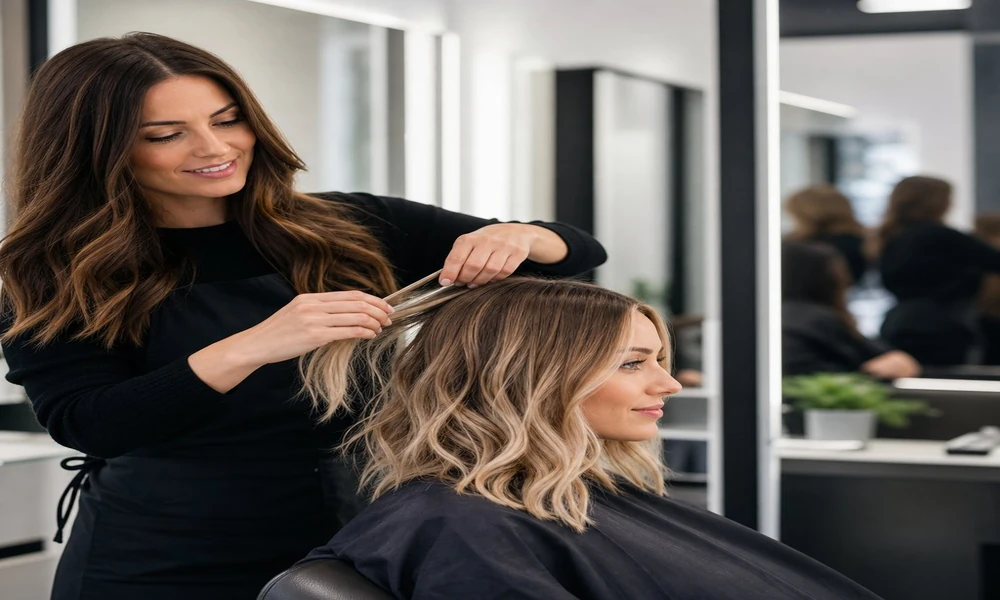
Stylist trimming a structured haircut
It’s also important to talk about your routine. How much time you spend on it every morning, if you ever use hot tools, etc. You want a cut that works for you, not against you.
Color
Color services can be used to add full coverage, give more dimension, make bold statements, or just touch things up. There are a variety of types, including all-over color, roots, highlights, lowlights, balayage, toning, glosses, etc.
Different methods require different amounts of maintenance. Color applied near the roots may need more maintenance than blended highlights, since there will be a visible line of demarcation as it grows out. Fashion colors and extreme lifting usually require multiple appointments and extra attention at home.
- What color you currently have and whether you’ve colored your hair in the past
- What you’d like to achieve and if it’s possible in one sitting
- How often you’ll need to come back
- What products you can use at home to maintain your color
- How this could affect your hair’s health
It’s important to provide accurate information about your previous color history (you can try here). If you’ve had previous color treatments, it can affect the outcome of your new color.
Treatments
Conditioning treatments are meant to address various issues like dryness, damage, dullness, breakage, frizz, or lack of elasticity. Different formulas may target different needs. Some focus on adding moisture, others may strengthen or repair broken hair, or seal the cuticle.
Clarifying treatments cleanse the hair of product, oil, and mineral buildup. Scalp treatments cleanse, exfoliate, or hydrate.
There are also a variety of smoothing and texture hair salon services, but the results and maintenance required will vary. Be sure to ask about the process and how it will affect your hair before you commit.
Styling
Blowouts usually consist of washing, conditioning, and drying. Depending on the desired result, you can get a sleek, voluminous, wavy, or curly look.
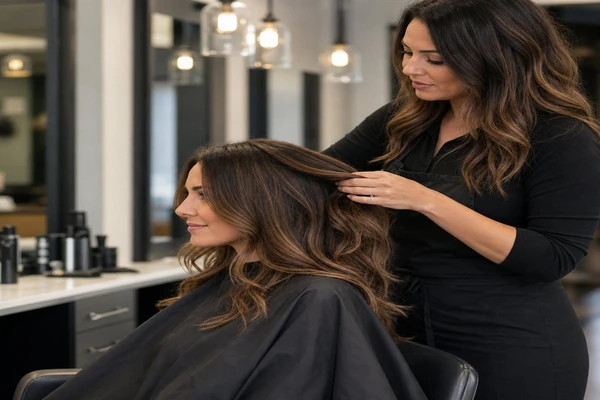
Stylist creating a polished special-occasion hairstyle
For special occasions, you can opt for updos, braids, curls, extensions, and accessories. Having ideas to show your stylist is great, but be willing to compromise depending on the length, thickness, and texture of your hair. For events where the hairstyle needs to last for hours, it may be worth booking a trial run to ensure the desired look.
Communicating Your Needs
It’s important to communicate clearly with your stylist. Let them know what you like, what you don’t like, and what you want to change. Photos can be a great way to help explain what you’re looking for, but be prepared for some flexibility. Hair types vary, so your exact request may not be achievable.
It’s also important to ask questions before any work starts. Inquire about price, how long the service takes, and how often it will need to be repeated. Also, ask what kind of home care is recommended. If you’re making a big change, start with a consultation or try something less permanent first.
Let your stylist know if you have allergies, sensitive skin, are on medication, pregnant, or have experienced irritation recently.
The stylist might suggest a patch or strand test to see how your skin and hair react. Don’t go in with scratches, sunburn, or an irritated scalp because the chemicals could aggravate the area.
Also ask if your hair should be washed or unwashed before the service; that will vary depending on the treatment. These little details can avoid reactions and surprises at the salon.
Some salons might have different service titles, so be sure to ask what your appointment entails. Your haircut may or may not include washing and styling; your coloring price might not include toner or a blowout. Inquire about deposits, cancellation policies, and the time frame for finishing your appointment to avoid any unpleasant surprises.
Choosing the Right Service
It’s not always necessary to go for the flashiest option. Consider the state of your hair, your budget, and how much time you can realistically commit to maintaining your look. With proper research and clear communication, you’ll be able to leave the salon with a result that looks fantastic and lasts longer than a day.