
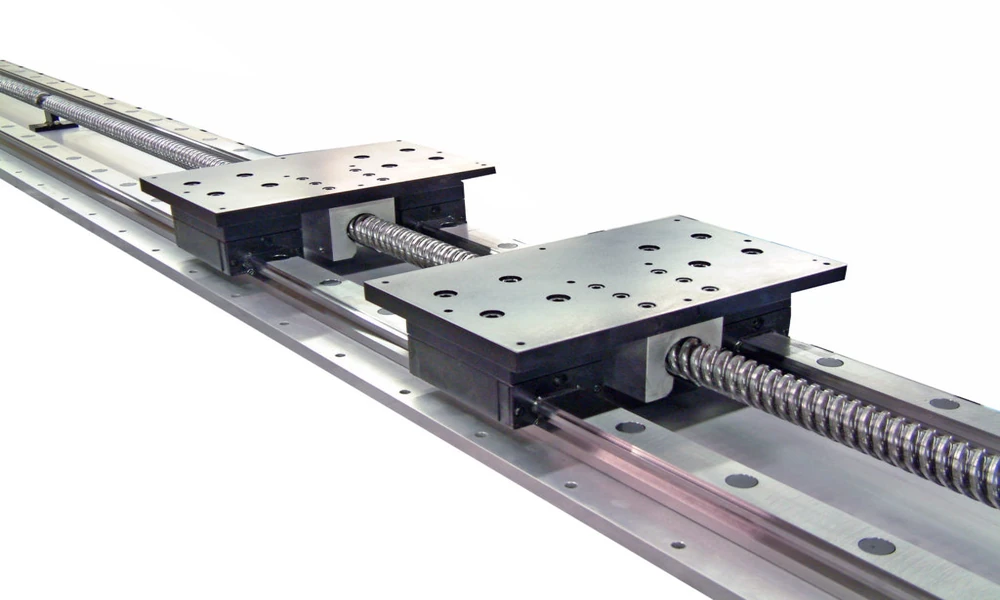

The modern manufacturing sector is advancing rapidly towards ultra-precision automation, heavy-duty industrial processing, and high-speed robotic assembly lines. Industrial machinery must execute repetitive movements with microscopic accuracy to meet stringent production standards and avoid costly operational errors. At the core of these smooth, multi-axis mechanical movements lies advanced linear motion technology. Engineers frequently face the challenge of eliminating friction, vibration, and positioning errors in heavy machinery blocks.
To achieve absolute structural efficiency, selecting a high-end linear ball bearing slide mechanism is paramount. This specialized mechanical component provides the frictionless guidance needed to sustain continuous high-velocity travel over long periods. For industrial facilities seeking to optimize their machinery lines, understanding how a premium linear ball slide enhances performance is the initial step toward operational excellence. By isolating load stresses and ensuring smooth directional travel, these components act as the foundational backbone of modern factory automation systems, enabling businesses to maximize output, minimize wear, and maintain absolute structural integrity across all automated assembly layouts.
Understanding the Fundamentals: What is It?
A standard linear ball bearing slide is a mechanical device engineered to provide low-friction linear movement along a single axis. It features a stationary rail guide and a moving carriage packed with recirculating steel balls. By substituting sliding friction with rolling friction, it allows heavy machine blocks to move effortlessly with minimal drive energy input. This configuration minimizes wear on the guide system, ensuring structural alignment remains consistent over millions of cycles. The design effectively distributes weight across contact points, reducing local mechanical stress and preventing premature component failure.
Exploring the Classification: What Are the Different Types?
Industrial automation demands various configurations depending on spatial limitations, weight distribution, and environmental conditions. When configuring a linear ball bearing slide, engineers typically categorize them into three main types based on specific design requirements and load capacities.
1. Open Type Slides
Open variations are designed for continuous, fully supported long shafts. They effectively prevent rail deflection over long-distance travel under heavy loads, making them ideal for large-scale industrial machinery that requires extended, unyielding support pathways across wide spans without compromising guide alignment.
2. Closed Type Slides
Closed units offer superior structural rigidity for traditional end-supported configurations. They completely enclose the shaft rail to deliver highly symmetrical load distribution, which is perfect for standard manufacturing applications where vertical or lateral loads are applied evenly without any structural twisting risks.
3. Miniature Type Slides
Miniature variants are carefully engineered for compact, high-tech machine environments. They provide ultra-high-precision guidance within severely confined spaces, making them absolutely essential for semiconductor assembly lines, medical laboratory devices, and intricate robotic applications requiring lightweight components.
Maximizing Performance: What Are the Key Advantages?
Integrating high-grade linear motion components delivers massive technical advantages to industrial engineering layouts. First, utilizing a linear ball bearing slide ensures unparalleled positioning accuracy and high repeatability, which is vital for CNC machining and automated robotics. Because rolling friction generates negligible heat, machines can operate at significantly higher velocities without experiencing thermal expansion errors. Second, these components boast exceptional load-bearing capabilities, allowing relatively small carriages to support immense industrial weight smoothly. Lastly, the drastic reduction in friction lowers the torque requirements for drive motors, resulting in substantial energy savings.
Achieving peak industrial output requires meticulous attention to the high-precision components guiding your production line. As modern factory floors demand faster cycle times and stricter accuracy, compromising on linear motion systems can lead to costly unscheduled downtime and frequent mechanical failures.
Investing in a robust linear ball bearing slide system is a strategic decision that guarantees long-term operational resilience, reduced power consumption, and exceptional precision. For manufacturers looking to source world-class industrial components, I.N.B stands out as the premier engineering partner in the region. I.N.B supplies a comprehensive, high-quality catalog of performance linear motion technologies, featuring exceptional durability, low maintenance overhead, and optimized multi-axis load-handling capabilities. They provide tailor-made solutions and consulting to ensure your automated machinery runs flawlessly under heavy conditions. Elevate your production standards, lower your overall factory energy consumption, and secure maximum mechanical longevity by integrating I.N.B’s premium linear guide systems into your manufacturing infrastructure today.