
There is something special about finding curly hair extensions that look so natural, people assume the curls are your own. For many Black women, that is the goal when choosing a sew-in, wig, or protective hairstyle. You want beautiful movement, flattering volume, and a texture that complements your natural hair without requiring hours of styling. But when comparing Burmese Curly hair vs. Kinky Curly, the decision is not always straightforward. Both textures can create gorgeous, believable hairstyles, yet they differ in curl definition, fullness, shrinkage, and overall appearance. What looks effortlessly natural on one person may require a little more blending on another. Understanding these differences, along with a few practical styling techniques, can help you choose extensions that fit your hair texture, lifestyle, and personal style.
Burmese Curly Hair vs. Kinky Curly: What’s the Difference?
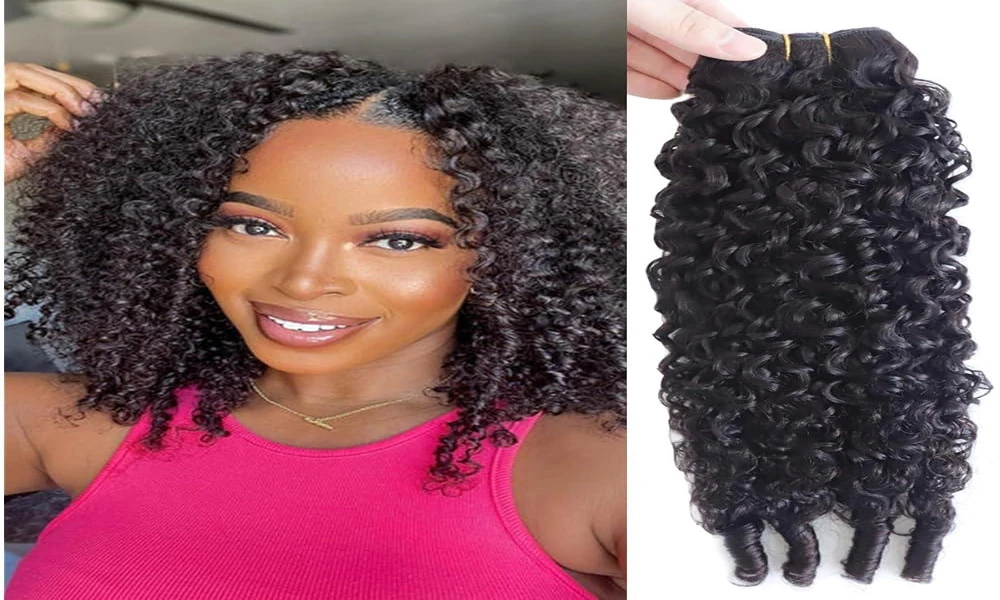
Natural textured hair comes in countless beautiful variations, from loose spirals to tightly packed coils. That diversity is exactly why choosing theBest Burmese Curly Hair involves more than finding attractive curls in a product photograph. You also want to understand how the texture behaves once washed, dried, and styled. Burmese Curly extensions are commonly associated with springy, defined spirals, a soft appearance, and noticeable bounce. The curls often appear more elongated when wet before gaining fullness as they dry.
Kinky Curly hair, by comparison, generally has a tighter curl structure and a more textured finish. Depending on the manufacturer, it can resemble certain natural 3B, 3C, or 4A curl patterns. Its compact curls may create a fuller silhouette, especially after fluffing or finger-separating. However, texture names are not standardized across the extension industry, so two products with the same label may look surprisingly different.
Another noticeable difference is how each texture responds to styling. Burmese Curly often offers a balance between visible spiral definition and soft volume, while tighter Kinky Curly patterns can produce a denser appearance with more shrinkage. Neither texture is inherently more realistic. The important question is whether its curl size, density, and surface texture complement the hair surrounding it.
| Feature | Burmese Curly | Kinky Curly |
| Curl pattern | Often springy, defined spirals | Typically tighter curls or coils |
| Volume | Full with visible definition | Often fluffier and more compact |
| Overall appearance | Soft, bouncy, dimensional | Textured, dense, voluminous |
| Shrinkage | Varies; often more elongated | Can show greater shrinkage |
| Blending | Depends on natural curl match | Depends on natural curl match |
| Styling preference | Defined curls and flowing movement | Tighter curls and textured fullness |
These comparisons describe common market characteristics rather than guaranteed specifications. Always examine actual product photographs, including images of fully dried hair.
Which Curly Hair Texture Looks More Natural on Black Women?
The most natural-looking hairstyle is usually the one that respects the characteristics of your own hair. A woman with naturally springy 3C spirals may find that Burmese Curly blends beautifully with her curl pattern, while someone with tighter, more compact curls may prefer a Kinky Curly texture. Even within the same curl category, hair can differ considerably in strand thickness, density, porosity, and shrinkage. This is why matching an extension to a curl chart alone rarely tells the whole story.
For women with textured or natural hair, exploring theBest Curly Hair Extensions should begin with examining how the curls look at the roots and throughout the length, rather than focusing only on the ends. A beautifully defined extension may still stand out if your natural roots are noticeably fluffier or your hair has a different sheen. Comparing textures in natural daylight can reveal differences that indoor photographs sometimes conceal.
Volume also makes a significant difference. A very dense installation can look bulky around the crown, while insufficient fullness may leave visible gaps. The goal is balanced density that moves comfortably and complements your face shape. With Burmese Curly, that may mean allowing the spirals to expand naturally instead of keeping every curl tightly defined. With Kinky Curly, it may involve gently separating curls to create softer, more organic fullness.
Can Burmese Curly look natural on 4A hair? Absolutely, depending on the specific curl pattern and installation. A well-matched closure or carefully planned sew-in can provide a convincing result without forcing your natural hair to imitate a different texture. If you prefer exposed leave-out, however, you may need to pay closer attention to how your roots and curls blend.
How to Choose the Right Curly Hair Extensions for Your Lifestyle
Beautiful curls are appealing, but how they fit into your everyday routine matters just as much. Someone who prefers clearly defined spirals and a more elongated hairstyle may appreciate Burmese Curly bundles. Women who love fuller, tighter curls and a textured silhouette may gravitate toward Kinky Curly. Both can work for professional settings, casual outfits, and special occasions. The difference often comes down to the amount of volume you enjoy and how you prefer to style your hair.
Before purchasing human hair extensions, look beyond the initial product photograph. Examine images showing the hair after washing and air-drying. Consistent curl formation, natural movement, and manageable tangling are useful quality indicators. Ask about shedding, cuticle alignment, and recommended care instructions. Quality matters because a curl pattern that looks attractive initially should also remain manageable through ordinary washing, conditioning, and careful detangling.
It also helps to be realistic about maintenance. Tighter curls may require more patient detangling, while elongated spirals can still develop knots or frizz without proper care. Neither texture is completely maintenance-free. If mornings are usually rushed, choose an installation and styling routine that can be refreshed without extensive manipulation. A hairstyle that looks wonderful but requires daily effort beyond your schedule may not be the most practical choice.
DIY Guide: How to Make Burmese Curly or Kinky Curly Extensions Look Natural
A seamless hairstyle rarely depends on the extension texture alone. Installation, curl preparation, product selection, and shaping all influence the final appearance. Fortunately, several simple techniques can help either texture look more convincing without relying on excessive heat or complicated styling.
Step 1: Compare the curls before installation. If the supplier’s instructions allow it, wash and air-dry a small section of the extensions. Examine the curls once they are completely dry, since wet hair can appear longer and more defined. Compare the extension with your own hair in natural light, paying attention to curl diameter, fullness, and sheen. This is especially helpful when planning a sew-in with leave-out.
Step 2: Choose an installation that supports natural blending. A professionally installed sew-in with minimal leave-out can create a soft transition between your hair and the extensions. If your curl patterns differ significantly, a closure may offer a more practical option by reducing the need to manipulate your natural strands. Avoid overly tight braids or excessive tension around the hairline. A comfortable foundation is essential for protecting your scalp and edges.
Step 3: Define the curls without overloading them. Lightly mist the extensions with water when recommended by the supplier, then apply a small amount of compatible leave-in conditioner or curl styler. Work in sections, gently detangling from the ends upward with your fingers or an appropriate wide-tooth comb. For a softer finish, separate selected curl clumps after drying. Avoid repeatedly layering heavy creams and oils, which can leave the extensions looking weighed down rather than naturally full.
Step 4: Blend your natural hair carefully. If you have leave-out, work with your existing curl pattern as much as possible. Gentle finger-coiling or compatible setting techniques can help encourage a closer match without excessive heat. When the textures are very different, changing the amount of leave-out or using a closure is often more practical than repeatedly trying to alter your natural curl structure.
Step 5: Shape the finished hairstyle. Adjust your parting, distribute volume evenly around your face, and check the hairstyle from different angles. Slight variations in curl separation can make the overall look feel less uniform. If trimming is necessary, consider having an experienced stylist shape the extensions while respecting their shrinkage. Remember that a natural-looking finish does not require every curl to look identical.
Everyday Styling, Maintenance, and Common Questions
For workdays and everyday errands, Burmese Curly can be styled with a defined side part or softly separated spirals for a polished appearance. Kinky Curly can look equally refined when shaped into a rounded silhouette or controlled with a loose half-up hairstyle. For weekend outings, fuller curls can create an effortless, relaxed look. On special occasions, both textures can be styled with accessories, flattering partings, or additional volume around the face.
Humidity, exercise, and frequent handling can affect how the curls behave throughout the day. Instead of trying to maintain perfectly identical spirals, embrace some natural expansion and movement. Carrying a small water-based refresher may help with occasional styling adjustments, provided the product is compatible with your extensions. After swimming or significant sweating, follow appropriate cleansing and drying practices rather than allowing moisture to remain trapped beneath an installation.
Nighttime protection is another simple habit that can help preserve curl definition. Loosely sectioning the hair and covering it with a satin or silk bonnet can reduce friction while sleeping. A smooth pillowcase provides an additional option. Avoid compressing wet curls overnight, and make sure both the extensions and the hair beneath an installed style dry thoroughly.
Between wash days, gently remove tangles from the ends upward and refresh only the sections that need attention. If the hair begins feeling coated or unusually stiff, cleansing according to the manufacturer’s instructions is generally more useful than adding another layer of styling product. Curl definition and fullness may change with wear, but consistent care can help maintain a soft, natural appearance.
Is Burmese Curly hair looser than Kinky Curly? It is often marketed with a more elongated spiral pattern, while Kinky Curly usually has tighter curls. However, manufacturers use these names differently, so compare actual textures before purchasing.
Is Burmese Curly suitable for 4A natural hair? Yes, particularly when the selected curl pattern complements the desired hairstyle. A closure can make blending easier when your natural curls are noticeably tighter than the extensions.
Which texture is easier to maintain? Neither is automatically easier. Curl tightness, hair quality, installation, and personal styling habits all influence the amount of care required.
Can you straighten Burmese Curly and Kinky Curly hair? Genuine human hair extensions may be heat-compatible, but you should confirm the manufacturer’s guidance and test a small section first. Repeated high heat can weaken the hair or alter its original curl pattern.
Which texture looks more natural for a sew-in? The strongest match usually comes from choosing curls with similar density, sheen, and movement to your natural hair, then using a well-planned installation that avoids obvious transitions.
Ultimately, the choice between Burmese Curly and Kinky Curly is personal. Burmese Curly may appeal to women who love soft, springy spirals and flowing definition, while Kinky Curly may feel more familiar to those who prefer tighter curls and textured fullness. Neither is universally more natural-looking. The most believable hairstyle is one that complements your hair, suits your everyday routine, and allows you to feel comfortable wearing it. With thoughtful texture matching, gentle styling, and consistent maintenance, either option can create beautiful curls that feel authentically yours.